Showing posts with label Dead Malls. Show all posts

08 February 2009

Game over, Cortana

To-day the course of my affairs required me to visit the Mall at Cortana. Cortana has certainly declined from its halycon days, but insofar business has held constant at a lower but steady level. But lo, what a shock I was in for to-day.

Part of the journey intent was to document the husk of the failed Steve and Barry's, the most recent of two anchor vacancies at this ostensibly six anchor mall:


The closing was recent, so the signage is still installed. But no longer are cheep sweatshirts sold here.


Now inside the mall, I was tempted to stay put for a spell and grab a bite to eat. But what a shock I was in for:


Cortana has in recent years fallen prone to inline vacancies, symptomatic of a declined enclosed center, but their level was low enough to be tolerable. But the number of empty storefronts had clearly grown since my last visit, to the point where the number was alarming and certainly not indicative of a commercially stable shopping center.

Looks like the past holiday season had not been kind to Cortana, for the stores had evaporated quite rapidly. I clearly remember many of the now empty spaces being occupied not too long ago.

I would guess that the vacancy rate is now around 40 percent. This is the sign of retail free fall.


The mall foot traffic was still quite constant, though of course nowhere near the level of a Mall of Louisiana or some such.

And of those stores remaining, about half were clearly "local" brands, with the other half comprised of the usual national retailers. A fair proportion of surviving stores were shoe and athletic apparel stores - always popular in the 'hood.


As is clear, even the kiosks are having trouble leasing.

Some tenants are clearly marked for extinction. Stores that rely on discretionary purchases such as Bath and Body Works and Limited appeared treacherously empty and are certainly hanging by a thread.

It would appear that the depression has finally made its mark in BR retail, with the weakest players feeling the pinch of collapsing incomes and economic dislocation. I can safely predict that there is no possible way that the Mall of Cortana will be open in five years.

Better get started on another greyfield redevelopment plan...

08 December 2008

Reign of the superthug

In retail America to-day there is a growing trepidation. Stores are closing. Chains are liquidating and going out of business right and left. Places that were once safe to walk around and shop now pose a cold and forbidding presence. Husks of once thriving retail litter and blight the suburban landscape.

What is the common thread of this retail failure?

The state of the economy is an obvious answer. But it doesn't explain everything. Certainly the depression will bring a final denouement to the many failing zombie retailing firms out there (you know who you are). But even before the terminus of the late credit boom, malls were failing in large numbers. Certain chains couldn't put it all together even in good economic times (Kmart, Circuit City, etc.). Scarred commercial strips abounded on the bleak and fractured arterials of the predominantly blue collar inner suburbs, not to mention the urban core itself.

Retail space is still being expanded and constructed despite the depression; what is being built, however, is a highly selective portion of the retail scene. The good retail offerings increasingly have turned to thriving upper income areas. Retail growth trends favor these demographics. The newest and fanciest retail concepts find fruition here. Nobody builds enclosed malls and shopping centers anymore. Open air concepts such as "lifestyle centers" and strip shopping plazas are the order of the day. Like lemmings as always, the development community follows the alleged trends.

But there was already good retail infrastructure existing. So why build even more space? The retail sector is vastly overbuilt. There is simply too much space chasing too few tenants and merchants.

It is, of course, a factor of location. People want retail offerings to be located reasonably close to where they live and work. They do not feel like driving an inordinate distance (as inner city dwellers like myself must do) to shop for groceries.

But people also will not shop where they do not feel safe, no matter how convenient from a location perspective.

If you read dead retail tribute sites such as this one, you will come to notice a common thread behind the various stories of retail failure portrayed therein. You will come to notice that each mall or retail center started out with high hopes, and may have even thrived for a time. However, the end result is often the same: the mall becomes populated by the "inferior element" in society, and the retail offerings come to cater to their needs, providing the average suburban shopper less of a reason to visit. Inevitably the crime and shootings follow, which precipitates the final period of decline leading to eventual closure.

What is the culprit therein? Poor mall management? Economic misfortune? New and unforeseen retail competition? Developer greed? Cheep commercial credit? (Corn-Fed credit per Bernanke's non-stop printing presses indeed permits an excess of commercial development that otherwise would not exist. But that is an enabling factor. Why build anew, with all the issues that entails, when it is immensely cheaper to invest in the already existing capital structure?)

In Jefferson Parish, Louisiana, which happens to be the Urban Prairie Schooner Heartland, there are three enclosed shopping malls located within a few miles of each other, all located closely upon the east-west axis that is Interstate 10. Each mall serves its specific retail niche which it has assumed over time based on changing market conditions. Each mall has adapted to its competitors and continues to thrive and remain profitable for its owners. Each mall provides a safe, pleasant, clean shopping experience free from fears of the lack of security or safety.

Why do three shopping malls thrive therein, despite close proximity? Because people shop there with the expectation that they will not be molested or otherwise harmed by a criminal element.

These malls draw patrons from all over the New Orleans metropolitan region. In decades past, my relatives from St. Bernard Parish would make the long trek across the city to Metairie or Kenner to shop at the malls there. Why did they prefer to make this long trip rather than spend their money at retail centers more proximate to their homes? (For those unfamiliar, St. Bernard Parish has no enclosed malls located within its limits. The most the parish's retail offerings could muster were a freestanding Sears [now defunct, a hurricane victim] and a Wal-Mart Supercenter.)

For those of you who know the New Orleans area, you will remember that in years past, the single enclosed mall located east of the Industrial Canal was the now-defunct Plaza at Lake Forest. For those of you not familiar, please peruse this insightful article to discover for yourself the sordid history of that center. No wonder my relations refused to shop there.

Granted, this is a localized example, but instructive nevertheless.

Eastbank Jefferson Parish, as of yet, does not house a significant underclass resident population. The vast underclass abyss of adjacent New Orleans can only traverse the inter-parish frontier with difficulty due to a poor transit system. Even when entering the E.J., erstwhile thugs will be watched at all times by a vigilant and probably excessively violent police state apparatus which vests itself in the guise of the Sheriff's Office.

I do not condone the sometimes thug-like activities of the JPSO here, having been on the receiving end a few times in my life myself. But the point is that safety is a primary factor in the success or failure of a retail venture. When the superthug is admitted into the retail precinct and permitted to do his thing, events predictably devolve downward from there.

This is not the job of the State police, which only makes things worse in their own way. This is up to the mall management. The thug's progress must be arrested at the outset.

But it is an uphill struggle. Increasingly large sections of the population have turned to indolence, subsidy, and other elements of the thug life. The thug population is increasing rapidly, which should be no surprise given that thug values have become the more or less mainstream cultural conceits of modern Amerikan society: living for the moment, emphasis on materialism, disrespect of other human beings, rejection of responsibilty and the sacredness of those human bonds inherent in the institutions of marriage and the family, disdain of productive activity including work, inculcation of a subsidy mentality of obtaining something for nothing, increasing pathological and criminal behavior, increased rates of social disorders characterized as "mental illness", decline of moral codes and value systems, rejection of the intrinsic value of human life and in particular the right to life of the unborn, and of course increased practice of all these values and increased tolerance of all those others who practice thug values.

So it should be no surprise that our malls and shopping areas have fallen prey to them, particularly our older centers in those neighborhoods which thugs have either colonized or otherwise "gone thuggin'."

And so the newer centers arise in the far suburbs, in areas free from thug activity for the moment. But as the empire of thuggery expands and productive human activity presumes to occupy less and less space within the geography of the urban area, even these centers will one day fall, a futile fiat money regime attempt to keep a decent offering of retail alive with only a limited lifespan. (This is intrinsically known by those who develop these centers. They are so cheaply constructed and adorned, I can only presume they are working under the presumption that they will only be profitable for a short period of perhaps ten to twenty years before dropping to 'second-tier' status with the thug invasion and thus making an eventual appointment with the wrecking ball.)

And in the final account, the thugs will control our destiny, since they will comprise the absolute majority. But by that time, don't expect much retail to be left, since the thugs will be too busy murdering us for anyone to care about much save bare survival.

It goes beyond retail, unfortunately. The dead mall phenomenon is but the canary in the coal mine. The thug increasingly plays a larger and larger role in our nation to-day. In due time, this role will become pivotal.

Such is the endgame of allowing the superthug to rampage unchecked. And such is the epitaph of our society.

23 November 2008

Dead Malls of Louisiana: Goudchaux's Flagship Store, Baton Rouge

(Not a dead mall, but dead retail nonetheless. Enjoy!)

“The world’s longest department store,” the flagship Goudchaux’s at 1500 Main Street just east of downtown Baton Rouge, was first constructed in the late 1930s, with the original structure then being expanded upon/renovated at various times throughout the years (usually at five year intervals). The present structure is two stories tall, with an adjacent 4-story warehouse attached on the west end. Because of limited space in the inner city and the importance of the bordering east-to-west streets as traffic thoroughfares, the nature of the expansion of the store was to grow lengthwise in the block between Main and Laurel Streets, parallel to those streets, eventually stretching for 2½ blocks from the KCS railroad line eastward across the rights-of-way of North 15th, 16th, and 17th Streets for 971 feet. This unusual shape gave rise to the nickname “the world’s longest department store.”

From the earliest, the Goudchaux’s management had recognized the value of free, convenient parking and provided ample amounts of it, so that today whole blocks or parts of the blocks surrounding the store to the east (up to North 18th Street) and south (up to Florida Street) are comprised of surface parking lots. From at least the 1950s onward, Goudchaux’s also operated a car care center on the corner of Florida and N. 15th Streets (1501 Florida), about a block from the main structure. This building remains in commerce today as an auto repair and service shop.

Goudchaux’s operated this store for many years and it was consistently profitable, also being centrally located near the downtown shopping district which dominated Baton Rouge retail until the 1970’s. In fact, Goudchaux’s did not open a second store until 1976, when they opened a branch store in the newly-opened Cortana Mall (now Mall at Cortana).

In 1979 Goudchaux’s entered the Lafayette market by opening a store at Acadiana Mall. In 1982, the Goudchaux’s organization and the Maison Blanche department store chain of New Orleans merged; the combined chain was headquartered in Baton Rouge. They could not use the Goudchaux name in the NO market due to the existence of a similarly named, NO-based retail chain (Leon Godchaux Clothing Co., Ltd., also called Godchaux’s), so the MB name was retained, at least in the NO area. This was the high point of Goudchaux’s history, when it comprised of two profitable regional chains, and interests for a time in the booming Florida market through its ownership of JW Robinsons of St. Petersburg (1987-89). The peak number of stores was 24, employing 8,000, with a sales volume of $480 million.

At some point before Mercantile Stores assumed ownership in 1992, the Goudchaux’s name was dropped and all stores became Maison Blanche, including the 1500 Main store. The flagship store at 1500 Main was by now seeing lean times, as its customer base had long since departed to the suburban outlets and competing department and discount stores in the suburban shopping malls and strip centers which had cropped up from the 1970s onward.

When Dillards purchased Mercantile Stores (which included Maison Blanche) in 1997, it assumed control of the 1500 Main store, which was subsequently rebranded as a Dillards. For its last few years of operation, the now-tattered store at 1500 Main served as a Dillards clearance outlet, before management finally gave in to market realities and quietly shuttered the store in March of 2000.

For some years after closing, the old store remained vacant and unused, a massive community eyesore without easy remedy. In 2003 (?) the site was purchased with the intent to redevelop the massive structure into an office center called Renaissance Park. At least one major potential tenant, BR-based US Agencies Insurance, made plans to relocate their headquarters to the former store.

However, fate has, at least temporarily, altered future plans for the former store. After Hurricane Katrina made landfall on August 29, 2005 and devastated the Gulf Coast, the Federal Emergency Management Agency (FEMA), charged to deal with the disaster, faced massive manpower needs and consequently space needs. Quickly they leased the entirety of the 1500 Main structure for the duration of the emergency, to house their emergency operations center. As of to-day, they are still occupying the structure. The emergency workers have long since departed, so the building now houses an army of post-disaster FEMAcrats, not just to deal with lingering poast-K issues, but to be on call when the next tropical chaos strikes.

26 October 2008

Dead Malls of Louisiana: Hammond Square Mall

Hammond Square Mall was a smaller ‘community’ mall (430,000 sq. ft.) located at the NW corner of the interchange of Interstate 12 and SW Railroad Avenue (Business US 51) in Hammond, Louisiana. It featured spaces for three anchors (at the end of its life: Dillards, a one story Sears [odd to me], and a vacant former JC Penney) and had a weird internal configuration: it was two level, but all mall entrances were from ground level, with the bottom level recessed ‘half’ a floor and the upper level raised ‘half’ a floor from the perspective of the entrance. The overall mall configuration was a simple “T” with anchors at each end of the “T” and a center court at the juncture with a main mall entrance and weird staircases all around. A recent-vintage AMC Theatre exists on an outparcel behind the mall.

Opened in 1976, in its entire 30 year or so lifespan the mall was never remodeled or repainted, which it certainly could have used as all wall colors inside the mall were this hilarious Day-Glo dark pink, as well as the usual heavy wood paneling, lack of natural light, and other features common to 1970s malls. The mall was a living time capsule and, while very cool from a mall history perspective, likely contributed to its demise. Of course in smaller communities such as Hammond where mall competition, and thus the impetus to stay current due to same, is scarce, this lack of remodeling is quite common.

Though this was not the most well-trafficked mall, it did seem to hold its own despite the lack of one anchor and what I estimated, upon my tour of the mall, to be a ~35% vacancy rate. However, its dated décor and the lifestyle craze finally caught up to it, and it is now in the process of being replaced with another stupid open air ‘lifestyle center’ (you saw that one coming).

Dillard's and Sears will remain in place and expand their stores while the mall goes down around them, with new freestanding retailers to be added, including Home Depot, Target and JC Penney (again). The existing Rite-Aid will also remain open. Demolition began in March 2007 with new tenants to open throughout 2008. The total projected space comes to 850,000 square feet.

The last day of business (which I witnessed personally) was March 31, 2007, and on this day all of the inline stores were either shuttered, closed with employees actively removing anything of value, or still open but selling off all inventory and furnishings.

Dillard's will expand from its approximately 70,500-square-foot store to 95,000 square feet; Sears will completely gut its store and refurbish it; and a 128,000-square-foot Target will be built next to Dillard's.

24 October 2008

Dead Malls of Louisiana: Mall at Cortana

(Inaugurating a new feature of this site without much fanfare, and in a desperate attempt to reduce my hard drive backlog, with this post I make my first presentation of those daring write-ups on Louisiana malls too hot for the likes of deadmalls.com. Enjoy!)

The Mall at Cortana, formerly the Cortana Mall, is Baton Rouge’s oldest extant enclosed mall (of four total historically). Opened on Wednesday, August 4, 1976 after four years of preparation and construction, it was at the time called one of the nation’s largest malls, with 1.4 million sq. ft. of retail space and space for six anchors. It is located about a mile to the east of the area’s first mall, Bon Marche, and was largely responsible for that center’s demise. It is located on the northeast side of the interchange of Florida Blvd. and Airline Hwy. in Baton Rouge, close to the region’s geographic heart.

The original anchors were JC Penney (with car care center in the parking lot), Sears, Goudchaux’s (a BR-based dept. store chain), and Dillards. Another BR-based store, HJ Wilson Co., opened a little later (Wilson’s was a catalog outlet store similar to Service Merchandise). Mervyn’s later took the sixth anchor spot but not immediately upon opening (I think the sixth anchor was added in the 1980s).

Original inline tenants included Piccadilly Cafeteria (still there), Thom McAn, Foxmore Casuals, Chess Kingman’s, Dutch Maid Doughnut Shop, Space Port Amusement Center, City National Bank, and Capital Bank. There was room for 100 stores at opening and currently there is space for 110. The name “Cortana” derives from the adjacent area; the mall is located on the old Cortana Plantation property.

Over time the anchor mix has changed. HJ Wilson was purchased by Service Merchandise in 1985 and consequently replaced at Cortana with an outlet of that chain; when Service Merchandise itself closed in 2002, the site sat empty until 2004 when Steve and Barry’s University Sportswear moved into its place. The Dillards relocated at one point to the old Goudchaux’s, possibly when that chain folded; in its place has been a rotating mix of anchors: Maison Blanche, McRae’s, Parisian, Foley’s, and finally Macy*s as of September 2006. Mervyn’s vacated its store during its 2005 restructuring as they pulled out of Louisiana (and several other states) entirely; the store remains vacant, with labelscars still showing. JC Penney and Sears have been constants since day one.

In terms of design, the mall is vintage 1970s on the exterior, but bland and modern on the inside, though here and there the mall shows its age. There are a few small skylights. There are interior planters and water fountains which are basically unchanged from opening day 30 years ago. The mall is in an L-shape with Sears and Dillards on the ends, JC Penney in the crook of the L (Penney’s has two mall entrances), the vacant anchor (former Mervyn’s) jutting off the corner of the L at an angle, and Macy*s and Steve and Barry’s to the side of the L on either side of the vacant anchor.

Inline tenants at present include Ruby Tuesday, Aeropostale, Champs Sports, Things Remembered, Stride Rite, American Eagle Outfitters, Body Shop, Frederick’s of Hollywood, Hot Topic, Wet Seal, Sunglass Hut, Waldenbooks, The Limited, Lane Bryant, Chick-fil-A, Victoria’s Secret, Payless Shoe Source, and many local stores. The mall has no true food court, but eateries are scattered throughout the mall corridors. A children’s playplace called “Cortanaland,” which is basically just an indoor playground, is located just outside the mall entrance to Steve and Barry’s. The mall parking lot contains a Firestone Tire outlet.

The Cortana Mall was the undisputed king of Baton Rouge retail until 1997 when the Mall of Louisiana opened at the intersection of I-10 and Bluebonnet Boulevard, in a rapidly growing area of Baton Rouge easily accessible from outlying areas. The opening of the Mall of La. diminished sales at Cortana by 15% in the first year after its opening. Cortana, in contrast to the Mall of La., is located in a mature part of the city and is not directly adjacent to the Interstate. However, the mall held its own for a while, partly by being relatively geographically distant from its competitor, and partly due to development of its outparcels which now include Lowe’s, a Wal-Mart Supercenter, Old Navy, Bed Bath and Beyond, Office Depot, Guitar Center, Burger King, and Bennigan’s restaurant.

The mall claimed 85% occupancy in 2004, 91% if not counting outparcels (a couple of strip centers on the outparcels have numerous vacancies). There must have been a massive die-off since this time. I first visited this mall in 2006; while the mall is holding its own, particularly in the central area, the extremities are showing major signs of mall rot, and the large numbers of vacancies are obvious, with occupancy probably around 70-75%. The former Mervyn’s wing and the far ends of the mall near Sears and Dillards are particularly distressing in this regard. Local stores and non-traditional tenants (such as the Post Office and a military recruiting office) are becoming more evident. The mall management likes to dress up the empty storefronts with advertising and window displays in a feeble attempt to mask the high vacancy rate.

Despite all this, this mall can not be written off yet. With five anchors, some thriving big boxes on the outparcels, and a proactive mall management (they promote the mall in the media a good deal), this mall is nowhere near death’s doorstep. The mall saw heavy traffic during both the 2006 and 2007 holiday seasons, with empty spaces filled (at least temporarily) by seasonal retailers. However, the Mall of Louisiana continues to consolidate its gains in the Baton Rouge retail market and is gearing for expansion, with a 2006-opened Rave theater located behind that mall, a new open-air lifestyle center (as a new wing of the existing mall) in the works, and improved access with the opening of the Picardy Ave. extension and new interchange with I-10 which greatly increased access to the mall. Competition from the upper end has surfaced with the opening in 2005 of the high-end Towne Centre at Cedar Lodge lifestyle center at the intersection of Jefferson Hwy. and Corporate Blvd., thus siphoning off those customers. Also, demographic pressures are chipping away, as the death of the Bon Marche Mall makes Cortana the most convenient choice for the predominantly poorer, Blacker, northern portion of Baton Rouge where there are no malls or even major shopping centers to speak of. Slowly Cortana is becoming the “ghetto mall.” And this does not even begin to consider the growing economic turmoil and its deleterious effect on retailers...

The biggest threat to the Mall at Cortana’s survival, though, comes from the inevitable future development of major retail centers further out in the suburbs, particularly in Livingston Parish which is part of Cortana’s natural trade area (since it is the closest mall). And in fact, a large-scale “lifestyle” development has been announced for land adjacent to the recently opened Juban Road interchange on I-12 just east of fast-growing Denham Springs. This development, called Juban Crossing, which is said to be “far more than a mall,” (BR Advocate, p. A1, 12/13/06) and would include over 1 million sq. ft. of retail, housing, entertainment, and recreational amenities, could put the Mall at Cortana on life support upon its opening.

(Though with the state of the credit markets these days, who knows what will happen - little work has commenced on the Juban Crossing site as yet.)

01 July 2008

Mall-aise

Turning from doom and gloom for a spell, and reviving a core aspect of this blog that has been moribund for far too long, here are some dead mall photos!!

Or not.  Anyway, these photos were obtained at great personal risk, and capture a declining part of America which the dickheads in the suburbs, insulated from this world up to now, will soon become better acquainted with as modern prosperity by the hour approaches an abrupt caesura.

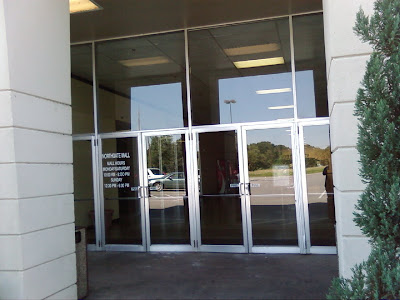
Below is the Northgate Mall, in Lafayette.  Little do many know that Lafayette actually boasts a second enclosed mall besides the dominant Mall of Acadiana - this vastly declined (but well preserved) older center on the city's north side, where its relatively small (by Louisiana standards) Black ghetto is located.  (I bet you won't find this mall in the literature of civic boosters.) Northgate Mall is located directly on Evangeline Thruway just north of Willow Street, but is somewhat concealed by later development, namely an Albertsons grocery (attached to the mall but not connected internally) and an adjacent Home Depot of recent vintage (separate from the main mall structure).

Drivin' around the parking reservoir:


In we go:


In glorious air conditioned comfort now:


Some sort of giveaway explains why the truck is parked there.  Meh.


Center court.


The first thing you notice is how time capsule like this place is.  This may be the best preserved 1960s era mall in Louisiana.

It was a real treat for me to discover this mall, I'll tell you.  While Northgate may not be fancy, its other-eraness is still a sight to behold - and well worth the hour drive.

More images!


This is a dead mall.  I had to show empty storefronts at some point, didn't I?


One end of the mall, a plastered over white space where Service Merchandise used to be.  I believe there is a call center occupying the structure now.


Mallmanac!  The Albertsons is the large pale blue square at the upper left, and the other pale blue squares are former anchors.  The former Service is on the right, and the former Montgomery Wards (now demolished to make room for the Home Depot) is below the Albertsons.  Wards is still labeled on this map, if you look closely.


How do you think I know these things?


Where Wards used to make its entrance.  I remember seeing this Wards actually open for business back in the late 1990s when I made a brief trip to Lafayette (in the middle of the night, no less).  This is the only Wards I ever laid eyes on while in existence (the chain had no outlets in the Chocolate City or its environs, at least during my lifetime).  My fondness for retail didn't exist then, so I never bothered to take pictures.  Sigh...

08 April 2008

Dead malls: why do they exist?

Some of the more observant of you may have noticed my interest in so-called 'dead' malls, listed on the bar to the right. But you ask, "What is a 'dead' mall?" Allow me to explain.

Certainly many of you may know of an enclosed shopping mall or two in your metropolitan area which does not meet the standards that you would expect to find for such a major retail destination as a shopping mall. These malls may have vacant anchor spaces; or high inline (that is, the mall interior hallway) vacancy rates; or the occupancy may be relatively healthy but the stores offered include few well known national chains and many locally owned, 'mom and pop' type affairs or eight different kinds of urban wear stores. These malls generally don't see the levels of foot traffic that regular, crowded malls do. These are known as dead malls. There is a rather large interest base out there which studies the phenomenon, and there are several websites currently dedicated to the subject.

So we know what they are, but the question you may have is "How can that be? How can a mall 'die'? They're too big to fail." Ah, but that is the great American conceit, "too big to fail." Nothing is too big to fail. Just ask the stockholders of Bear Stearns.

In any case, malls are commercial ventures and like all commercial ventures in this fiat money regime, there is a risk of either: having made an improper or unsound investment which presupposes retail demand that simply does not exist; or losing business to competitors for various reasons, and thus descending into insolvency. Most mall failures are a case of the latter, but some dead malls (especially "downtown malls") fall into the former category.

Okay, so malls fail because the market evolves and changes constantly, and consumers are fickle and will abandon one shop for another on a whim. Sounds simple, right? However, there are deeper trends working here besides this. The naysayers are, in a way, right. Malls are simply too large of an investment to be permitted to fail by their owners. They are generally quite valuable pieces of property, after all, and the owners are as interested in obtaining a profit as any other capitalist would.

And from the early days of mall construction in the 1950s through the 1980s, you never saw the commercial failure of a major enclosed shopping mall, anywhere, in the manner which has become rather common in the past decade and a half (except for one stark exception).

So what happened? Why are malls dying right and left today, after so many years of retail dominance? After all, don't people still go to malls? Isn't the mall as American as grandma and apple pie?

(Actually, no - there are shopping malls all over the globe now. But I digress.)

For one thing, the market for retail space has long been overbuilt and over-saturated, thanx to easy credit courtesy of a criminally benevolent State and the Bernanke Hi-Finanz Boyz who run the printing presses nonstop. A retail die-off is only natural, the course of a market working through a much needed correction.

Secondly, retail trends indicate that large enclosed malls have fallen out of favor with consumers - they now are supposed to prefer open air shopping centers such as strip malls. This is the reasoning by which the 'town center/lifestyle center' and 'power center' craze is being fueled. (Of course, this doesn't explain why healthy malls remain packed with shoppers, and doesn't contemplate that consumers might value climate controlled shopping far more that is currently estimated. After all, it sure beats shopping in the heat, cold, or rain, depending on the local climate.)

But I believe that something deeper is going on. And that something deeper, regrettably, is the rise of the thug, and the death of the American consumer.

As more folks, supported by an all too willing to acquiesce State, choose the thug life - the path of destitution and irresponsibility - logically their disposable income will decrease. And what little cash they have will be required for essentials such as food and illegal drugs (always essential to the thug). So they will not be spending much at the mall, except to buy some thug shoes and threads once in a while. (Ever notice how many dead and dying malls manage to retain a Foot Locker until near the end?)

Dead malls are never completely empty except at the very end of their lives. Generally there is a period where a declining center transitions from relatively healthy to second tier. This is the period when the thug element generally becomes dominant among the mall's patrons. Usually this ushers in a wave of criminal activity, which will be played up in the media and will eventually lead to the mall's final demise as a viable commercial property, and ultimately its closing.

Mall management and owners, try as they might, cannot usually save a dying mall once it is done for. Besides all the other things mentioned above, the American consumer overall is poorer today - thanks to lower real wages, inflation, increasing taxation, decreasing employment security, high personal debt levels, etc. So he cannot be counted upon to save the sinking ship. There are fewer dollars in play today, and what is available largely goes to the established, healthy, and dominant centers since American consumers are like so many lemmings, frequenting the places where everyone else goes. And the dominant centers have more shops to offer, provide more amenities, and generally anchor large and well-established retail centers centrally located in the suburbs.

The first mall ever recorded
as having succumbed to commercial failure was exterminated by the rise and reign of the superthug. It is instructive to study the fate of this mall, which remains empty, unused, and standing among the ghetto ruins of its home city, thirty years after it closed its doors for business for the final time. For this is the wave of the future - the anti-civilization, the reverse of progress, the triumph of death over life - unless this country gets its act together and exterminates superthuggery from its culture and society.